Skip links

Modern kitchens with island - design ideas & planning tips

A kitchen island has long been more than just a functional element; it embodies a modern lifestyle and sociable get-togethers. Thanks to its central position, the island kitchen can be reached from all sides and its location can enhance the kitchen as a highlight.

Advantages of a kitchen island

Additional work surface and storage space

A kitchen island considerably extends the usable area. It offers space for preparing food, storing kitchen appliances and can create additional storage space with base units or shelves. This is particularly advantageous in spacious kitchens, as several people can work at the same time without getting in each other's way.

Social interaction and communication

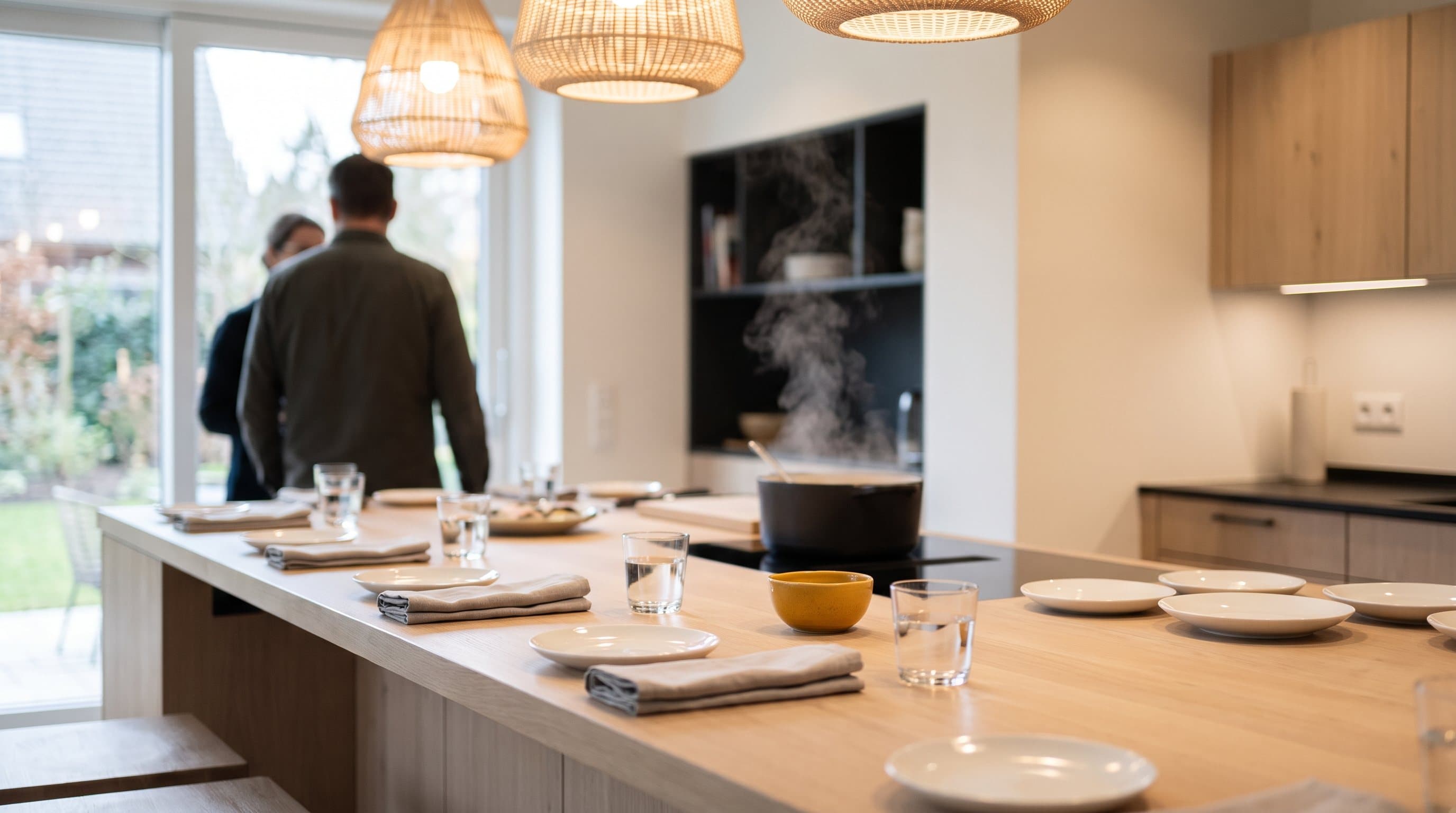
In open-plan living concepts with an island, this acts as a central meeting point. It makes it possible to interact with family and guests while cooking without being separated from the action. This encourages communication and makes the kitchen the heart of the home

Multifunctionality

Depending on the equipment, the kitchen island can take on various functions:

  • Cooking centerIntegration of hob and extractor fan
  • Sink area: Installation of sink and dishwasher.
  • dining area: Extension with seating for quick meals or social gatherings.

This versatility makes the kitchen island an indispensable element in modern kitchens.

Planning a kitchen island

Room size and space requirements

To integrate a kitchen island, the kitchen should be at least 15 to 20 square meters in size. A minimum distance of 120 centimetres is recommended between the island and the surrounding kitchen units or walls to ensure sufficient freedom of movement.

The dimensions of the kitchen island should be in proportion to the size of the room. A depth of at least 80 centimetres is advisable to provide sufficient work surface. The width varies depending on the space available and the desired functionality. It is important not to oversize the island so as not to overload the room.

Size and proportions of the island

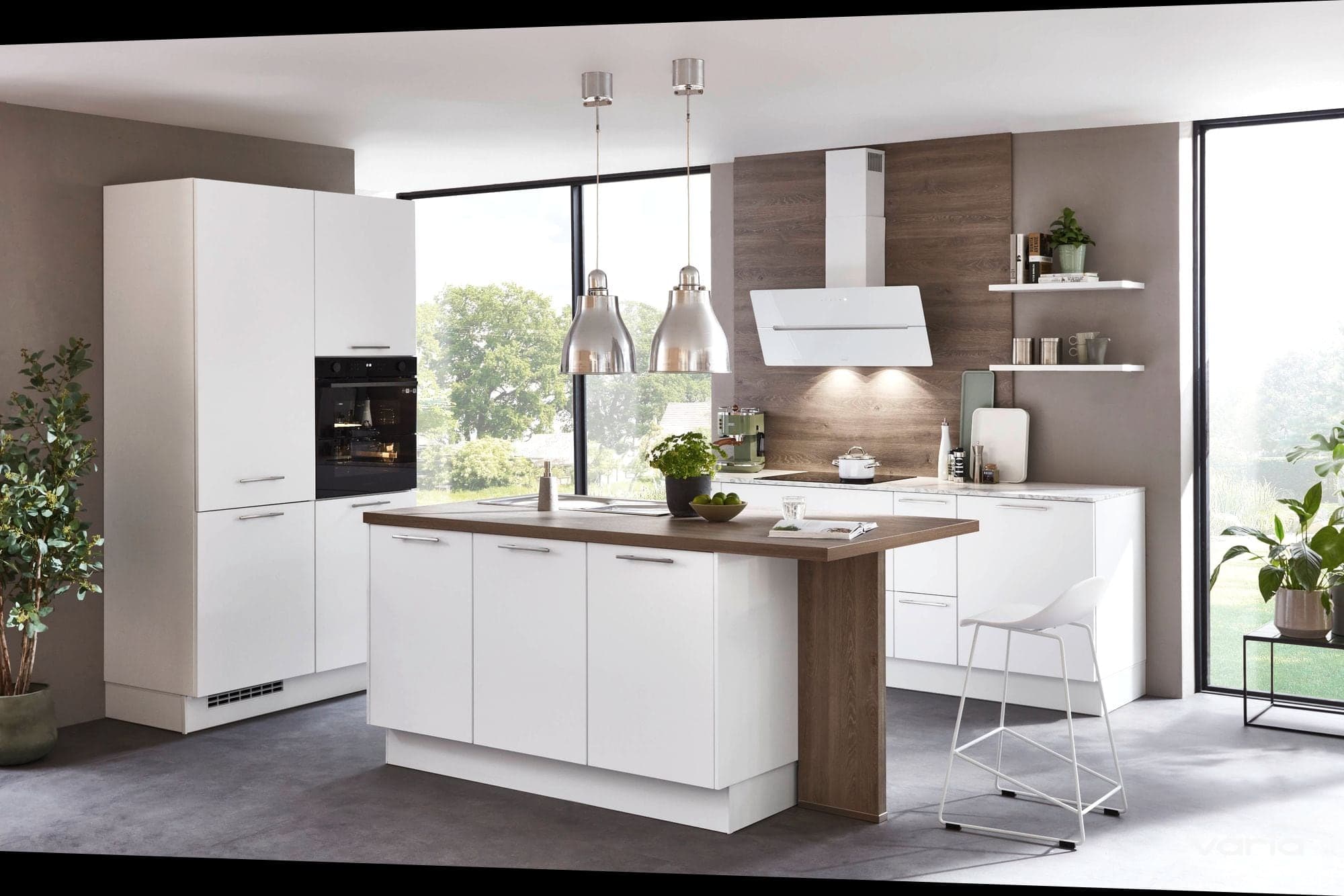
Küche mit Kochinsel

Functional equipment

When planning, it should be decided which functions the island should take on:

  • Hob: Requires power connection and effective extractor solution.
  • Sink: Requires supply and waste water connections.
  • Storage space: Integration of drawers, cupboards or open shelves.
  • Seating arrangement: Overhanging worktop or attached counter for bar stools.

Early planning of the connections is essential, especially for new buildings or major renovations.

Design ideas for kitchen islands

Contrasting materials and colors

The use of different materials and colors can give the kitchen island a special accent. For example, a dark wooden front can be combined with a light marble worktop to create an elegant contrast.

Integrated lighting

Sophisticated lighting sets the scene for the kitchen island and ensures optimum working conditions. Pendant lights above the island provide both functional light and atmospheric accents.

Mobile or modular islands

Mobile islands on castors or modular systems that can be moved or extended as required are suitable for smaller kitchens or flexible room concepts. This offers adaptability and makes cleaning easier.

Practical tips

Integration into the floor plan

Integration into the floor planThe positioning of the kitchen island should support the natural flow of work. A central position enables short distances between the hob, sink and fridge. In open-plan layouts, the island can act as a room divider and create a transition to the living area.

Consideration of installations

Electricity, water and exhaust air connections must be planned at an early stage. Particular attention must be paid to the extractor solution, especially for island hoods or integrated systems.

Would you like to find out whether a kitchen with an island is right for you? Make an appointment now with your local kitchen studio and let yourself be inspired.

en_GBEN