Skip links

Ceramic worktop for the kitchen: modern design meets high-tech material

In recent years, ceramic has become one of the most popular materials for kitchen worktops. The combination of an elegant look, extreme durability and hygienic properties makes ceramic worktops the ideal solution for sophisticated kitchen concepts - from family kitchens to open-plan designer kitchens.

What began thousands of years ago with fragile clay pots is now a highly compacted, durable high-tech material. Ceramic is not only used in dental technology, but even in brake disks - proof of its extreme resilience. In the kitchen, it not only impresses in terms of functionality, but above all with its stylish, purist look.

What is a ceramic worktop?

A ceramic-worktop consists of natural raw materials such as clay, feldspar, quartz and porcelain clay, which are sintered at very high temperatures. This firing process creates a non-porous, dense and extremely hard surface that is ideal for use in the kitchen.

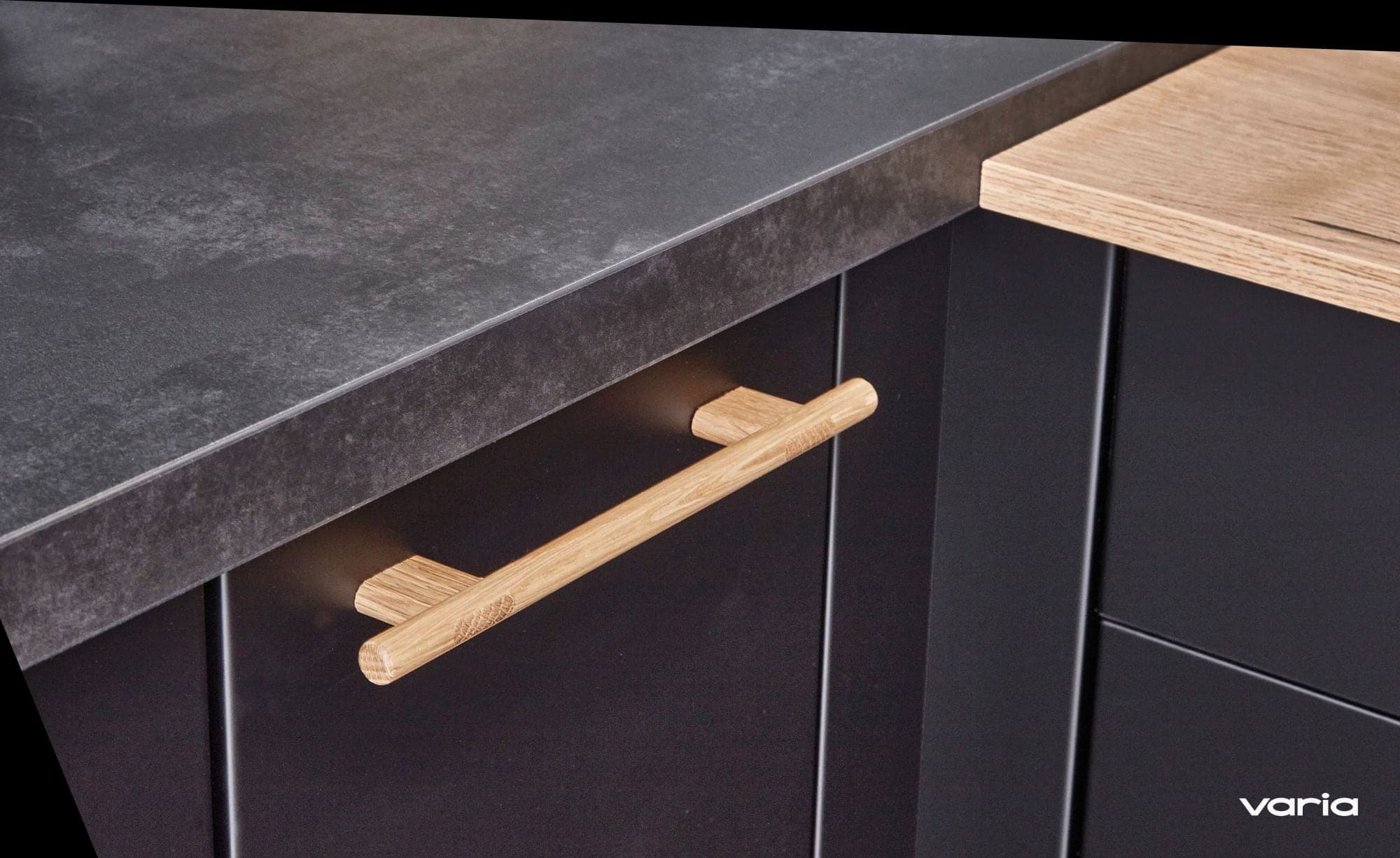
Ceramic tiles are available in numerous colors and designs - from marble look to concrete look to minimalist plain colors. All-ceramic versions are also available, which ensures a high-quality appearance, especially with open visible edges. The material is also completely food-safe, color-stable and UV-resistant - perfect for kitchens with lots of natural light.

Advantages of ceramic worktops in the kitchen

The popularity of ceramic worktops is no coincidence. The material has a number of convincing advantages:

Glaskeramikoberfläche MattFinish
  • Extremely heat-resistant - Hot pots and pans can be put down without hesitation.
  • Cut and scratch resistant - the hard surface also resists sharp knives.
  • Acid resistant - Whether lemon juice, vinegar or wine: ceramic remains durable and easy to clean.
  • No impregnation necessary - In contrast to natural stone, no additional surface protection is required.
  • Outstanding hygiene properties - the closed surface prevents the penetration of bacteria or liquids.
  • Easy to care for in everyday life - Simply wipe with a damp cloth.
  • Available in many decors - Large selection of colors, patterns and surface textures.

This makes the ceramic worktop not only practical, but also a real design statement.

Ceramic worktop disadvantages - What should you look out for?

As many advantages as ceramic offers, there are some limitations that should be considered before making a decision:

  • Size restriction: As the slabs are fired in one piece, the maximum dimensions are approx. 3 meters long and 1.5 meters wide. Visible joints are necessary for larger areas.
  • Sensitive to point loading: Despite their hardness, punctual, strong impact (e.g. a heavy pot on an edge) can lead to chipping.
  • Price: Due to the complex production process, ceramic is one of the most expensive materials - comparable to exclusive natural stone.
  • Not flexible: Unlike wood or certain plastics, ceramic does not yield under load - important for installation and processing.

These Ceramic worktop disadvantages are not an exclusion criterion for many - but they should be included in kitchen planning.

Cleaning ceramic worktops - quick, easy & hygienic

Reinigung Keramik Arbeitsplatte

A real plus point of the ceramic worktop is that it is easy to clean on a daily basis. The closed, non-absorbent surface means that dirt doesn't stand a chance.

How to clean your ceramic worktop properly:

  • Daily a soft cloth with water or a mild, pH-neutral all-purpose cleaner is usually sufficient.
  • For heavier soiling (e.g. grease, limescale), glass cleaners or special ceramic cleaners can help.
  • No aggressive agents necessary - Avoid using scouring milk, chlorine or abrasive pads.
  • No follow-up treatment required - Impregnation or sealing is not necessary.

Anyone who wants to clean a ceramic worktop will appreciate the uncomplicated handling - a real advantage in the often hectic kitchen routine.

Frequently asked questions about ceramic worktops

What are the disadvantages of a ceramic worktop? Ceramic is expensive, sensitive to punctual impact loads (e.g. heavy objects on edges) and technically limited in terms of worktop size (max. approx. 3 m × 1.5 m).

Varia offers ceramic worktops from the following manufacturers, among others:
systemceram, systemo, Villeroy & Boch, Lechner, Dekker and artego (in combination with matching kitchen furniture).

Discover numerous ideas for designing your ceramic worktop

Ceramic worktops not only offer a durable and easy-care solution for your kitchen - they also give your room an unmistakable elegance. When choosing the right worktop for your kitchen, the focus should be on functionality as well as appearance. Be inspired by the wide range of options and find the perfect solution for your personal kitchen style.

Withdraw from contract

en_GBEN